EN

Why LCD Screen Is Still the Mainstream Choice for Display Terminals
Every few years, a new display technology emerges and headlines declare that the traditional LCD screen is finally being dethroned. OLED panels promise deeper blacks. E-paper claims ultra-low power. Mini-LED backlights deliver improved contrast. Yet in the world of display terminals — from industrial HMIs and point-of-sale systems to vehicle dashboards and public information kiosks — the LCD screen continues to command the largest share of deployments. As of recent market data, LCD technology holds approximately 60% of the global display market, and in the terminal display segment specifically, TFT LCD panels account for roughly 46.1% of market share, while OLED stands at just 16.2%.
So what keeps the LCD screen at the center of display terminal design decisions, even as competing technologies mature? No single factor explains this — it comes down to cost structure, supply chain depth, proven reliability, and engineering flexibility that competing technologies have not yet been able to match in real-world terminal deployments.
Cost Efficiency and Supply Chain Stability
One of the most persistent advantages of the LCD screen is its cost-per-inch value proposition. After decades of manufacturing scale-up, the supply chain for LCD panels and LCD modules is deeply mature. Component sourcing — from glass substrates and liquid crystal materials to backlight units and driver ICs — is distributed across a large, competitive supplier base. This maturity translates directly into predictable pricing, stable lead times, and accessible inventory for terminal manufacturers.
In contrast, OLED production remains concentrated among a smaller group of manufacturers. For a terminal OEM planning a multi-year product lifecycle, locking into an OLED supply chain introduces risk around availability, pricing volatility, and continuity of supply. For the same reason, when working through the total cost of ownership (TCO) calculation, the LCD screen consistently delivers a lower baseline cost that is easier to justify across large-scale terminal deployments — particularly in price-sensitive markets like retail POS, industrial automation, and public infrastructure.
Reliability and Longevity That Terminal Applications Demand
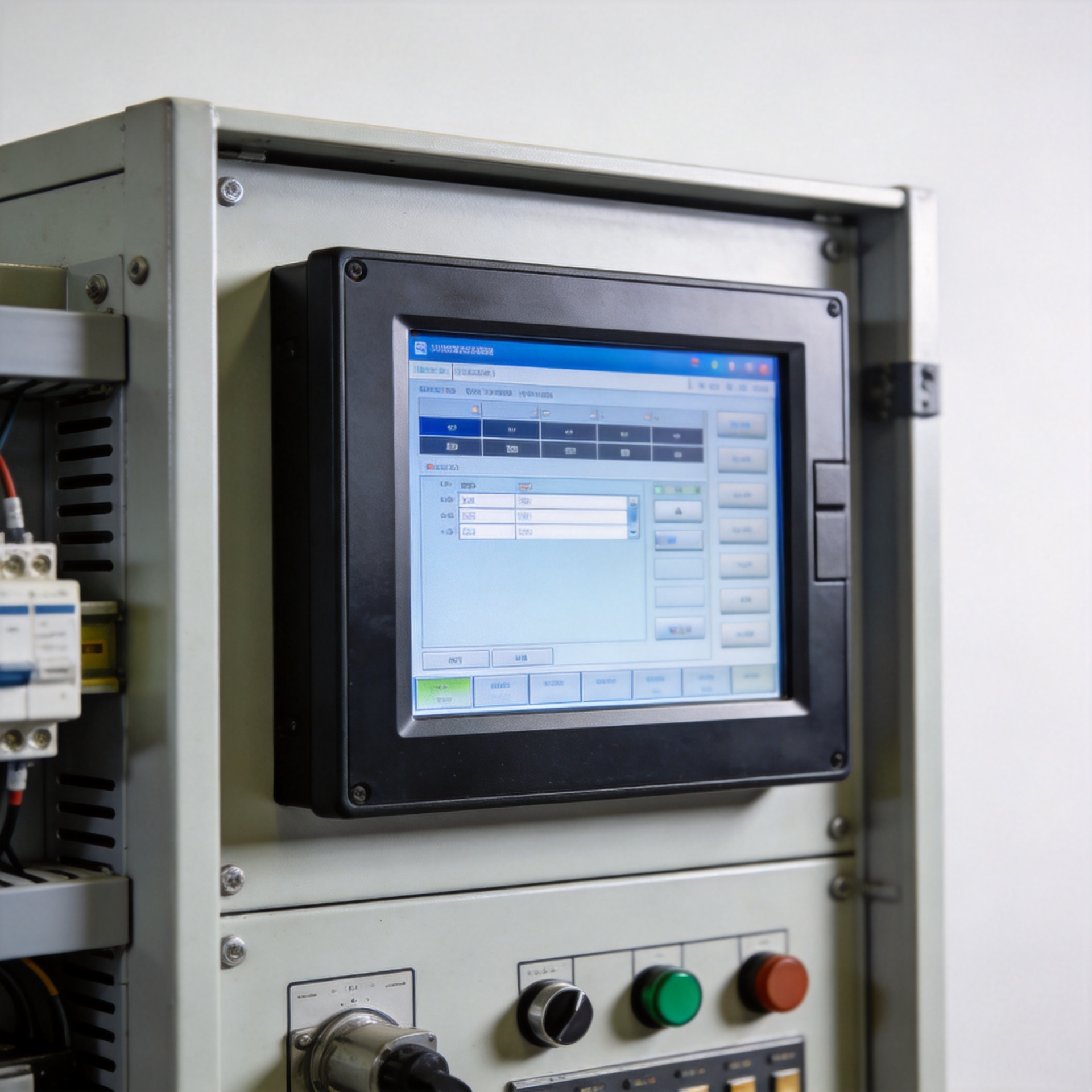
Display terminals are rarely consumer devices. They operate in environments where maintenance access is limited, replacement cycles are long, and unexpected failure carries real operational cost. Industrial-grade LCD screens are engineered to address exactly these conditions. WLED backlight assemblies in industrial LCD modules are routinely rated for over 50,000 hours of operational life — a threshold that translates to more than five years of continuous 24/7 operation before meaningful degradation occurs.
Temperature tolerance is another dimension where the industrial LCD screen has a clear engineering story. Wide-temperature LCD modules are available with operating ranges from -40°C to 85°C, covering the thermal extremes encountered in outdoor kiosks, vehicle cabs, factory floors, and cold-storage facilities. This range is not theoretical — it reflects genuine qualification testing that terminal integrators can verify and specify into procurement contracts.
OLED technology, while competitive in consumer and premium mobile applications, carries a well-documented vulnerability for terminal use cases: burn-in. In applications where a static interface element — a status label, a logo, a fixed data field — is displayed for thousands of hours, OLED panels can develop permanent image retention. For display terminals where static elements are the norm, not the exception, this is not a theoretical risk. It is a design constraint that has led many terminal engineers back to the LCD screen as the more operationally reliable choice.
High Brightness and Outdoor Visibility
Outdoor and semi-outdoor terminal deployments introduce a challenge that cuts to the heart of display technology selection: ambient light. An LCD screen equipped with a high-brightness backlight — 800 nits and above — can achieve readable contrast ratios even in direct sunlight conditions that would wash out a standard panel. High-brightness LCD modules in the 800–1500 nit range are available as standard catalog items from industrial LCD manufacturers, supported by the mature supply chain infrastructure described above.
This is not a trivial advantage. Designing an outdoor terminal around an LCD screen with a specified, off-the-shelf high-brightness module is a well-understood engineering path with predictable performance outcomes. Achieving equivalent outdoor visibility with OLED requires addressing different challenges, including peak brightness limitations and the compounding effect of direct sunlight on panel longevity. For terminal designers, the LCD screen offers a more straightforward engineering solution for outdoor deployments — and one with a longer track record of successful field performance.
Customization and OEM/ODM Flexibility
Display terminals rarely use off-the-shelf panel sizes. A retail self-checkout terminal, an industrial HMI panel, and an in-vehicle infotainment system each carry specific dimensional and interface requirements that standardized products often cannot satisfy. The LCD screen module ecosystem has evolved to address this reality through well-established OEM and ODM customization pathways.
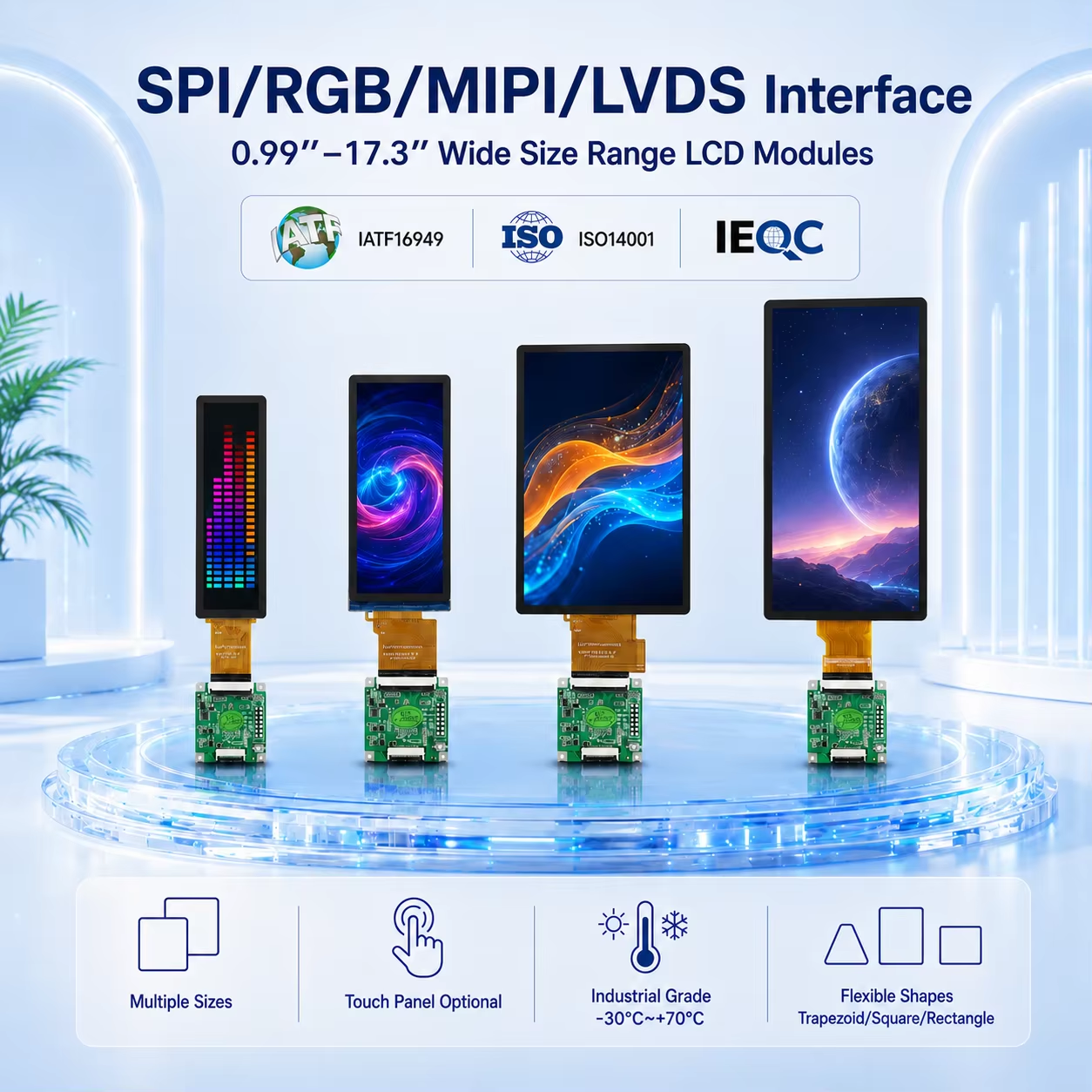
LCD module manufacturers — particularly those with direct factory operations — can support custom dimensional specifications, interface configurations (MIPI, RGB, LVDS, SPI), brightness levels, and surface treatments including anti-glare (AG) and anti-reflection (AR) coatings. This engineering flexibility is available at competitive minimum order quantities that would not be economically viable in emerging display technologies with smaller production bases. For terminal manufacturers working on differentiated products, the LCD screen offers a practical path to a display solution that fits the application, rather than forcing the application to fit the display.
How LCD Compares to Competing Display Technologies for Terminals
A fair comparison requires acknowledging where competing technologies have genuine advantages. OLED delivers superior contrast ratios and supports thinner form factors — both meaningful for consumer electronics and premium mobile devices. E-paper excels in static content applications with ultra-low power requirements. Mini-LED backlighting improves local dimming performance in LCD-based systems.
But for the broad category of display terminals — where continuous operation, wide temperature tolerance, controlled total cost, and long-term serviceability matter most — none of these technologies have yet assembled the same combination of advantages that the LCD screen delivers. OLED's burn-in sensitivity and higher unit cost remain structural limitations for high-utilization terminal deployments. E-paper's slow refresh rate rules it out for dynamic data display. Mini-LED represents an enhancement to LCD, not a replacement for it.
The result is that, when terminal engineers weigh the full set of design criteria, the LCD screen continues to emerge as the default baseline — not because of inertia, but because the engineering case for it remains genuinely strong.
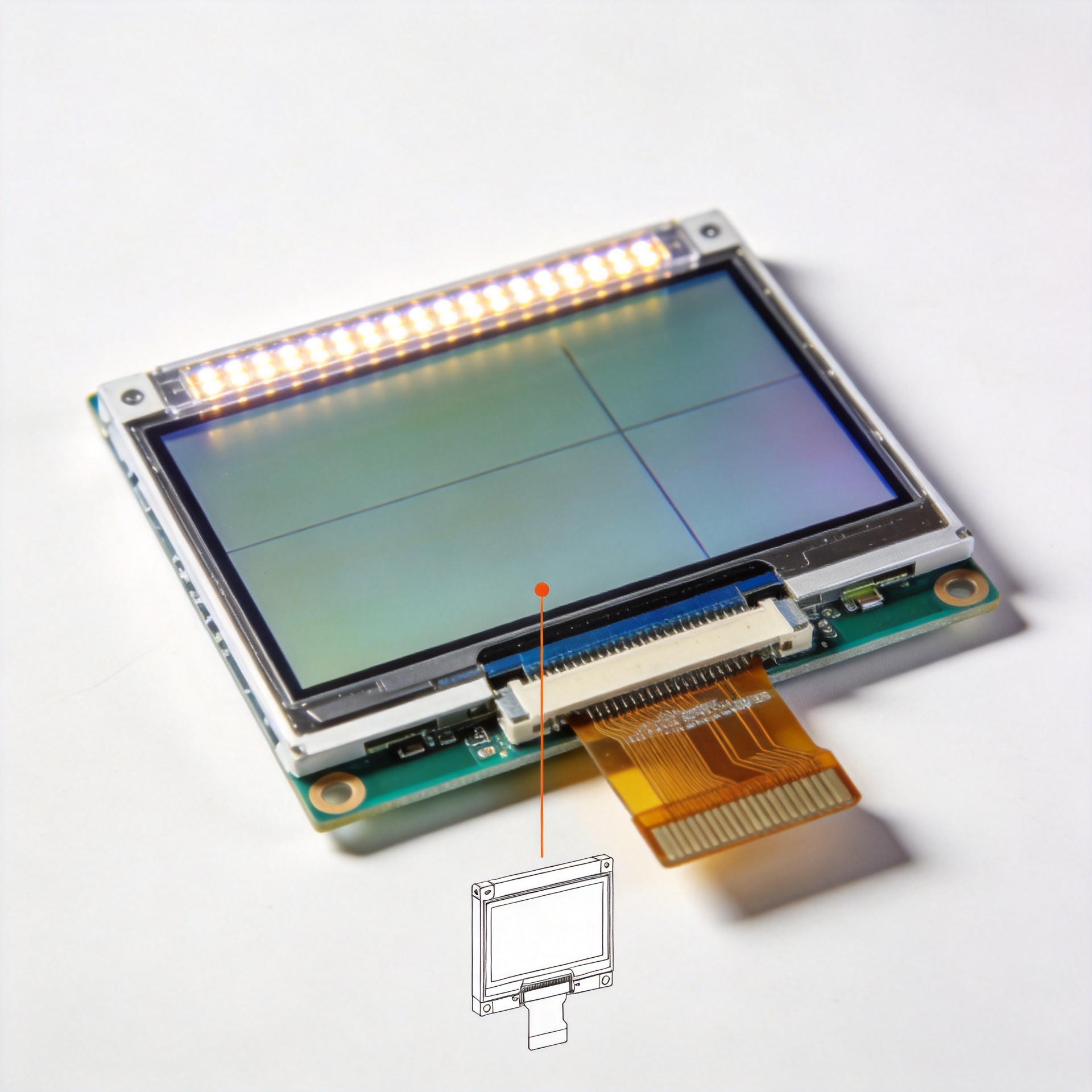
The LCD Screen Continues to Evolve
The LCD screen is not standing still while competing technologies advance. IPS panel technology has significantly expanded viewing angle performance compared to early TN LCD panels. Advanced surface treatment options improve outdoor readability. Optical bonding (full lamination) reduces internal reflection and improves contrast perception. These engineering improvements, layered onto a mature and cost-competitive manufacturing base, keep the LCD screen competitive across an expanding range of terminal applications.
For terminal designers and procurement engineers evaluating their next display platform, the LCD screen offers a combination that remains difficult to displace: a proven technology with a mature supply chain, demonstrated reliability across challenging environments, a wide range of customization options, and a total cost of ownership that continues to be competitive against newer alternatives. That is why the LCD screen remains the mainstream choice for display terminals — not as a legacy holdover, but as an actively evolving technology that continues to meet the practical demands of the applications that matter most.